Showing posts with label Technology. Show all posts

Motorola One Smartphone Gets Benchmarked

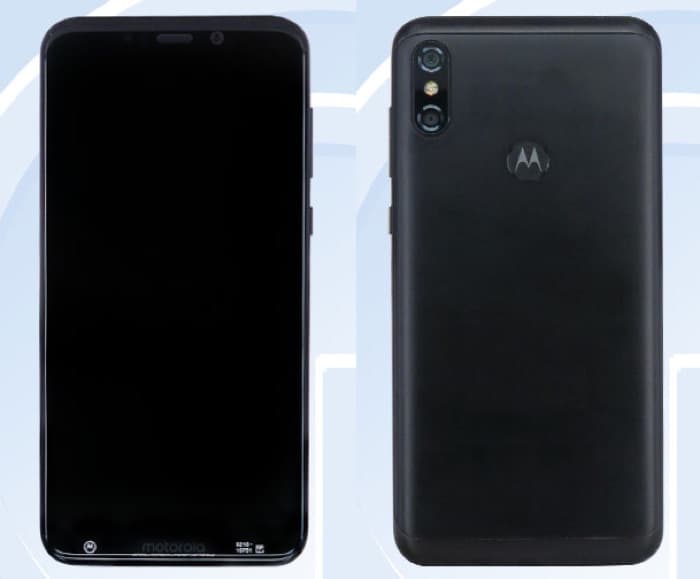
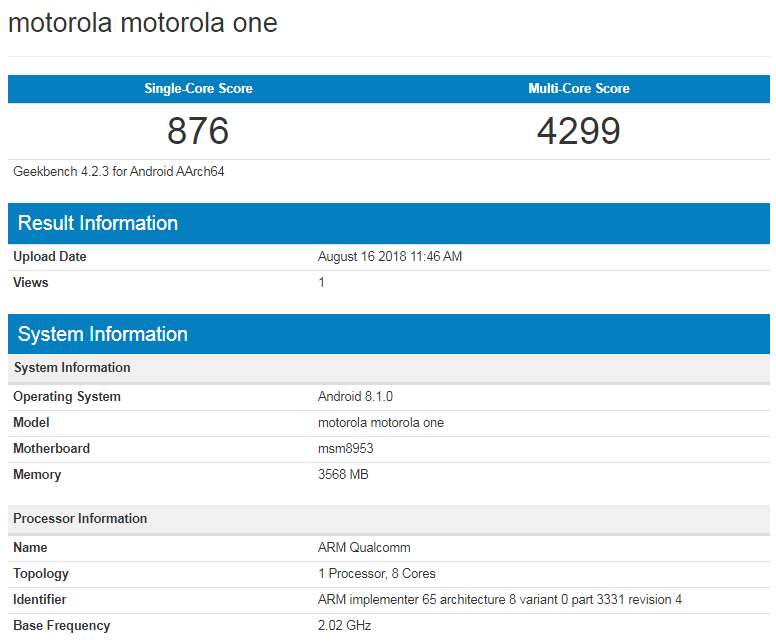
The Motorola One has appeared on GeekBench and this has confirmed some of the specifications for the handset.

Motorola One

The device is listed on Geekbench with a Qualcomm Snapdragon 625 processor and 4GB of RAM, the handset is also listed with Android 8.1 Oreo.

Motorola One

A listing for the handset revealed that the device would come with a 6.18 inch display with a FHD+ resolution of 2246 x 1080 pixels. The device will have a range of storage options including 32GB, 64GB and 128GB.

Other specifications on the new Motorola One will include a 12 megapixel front facing camera for video calls and Selfies, plus a 16 megapixel rear camera and a secondary 5 megapixel rear camera.

https://ift.tt/2vRlcPI

Vivo V11 Android Smartphone Leaked

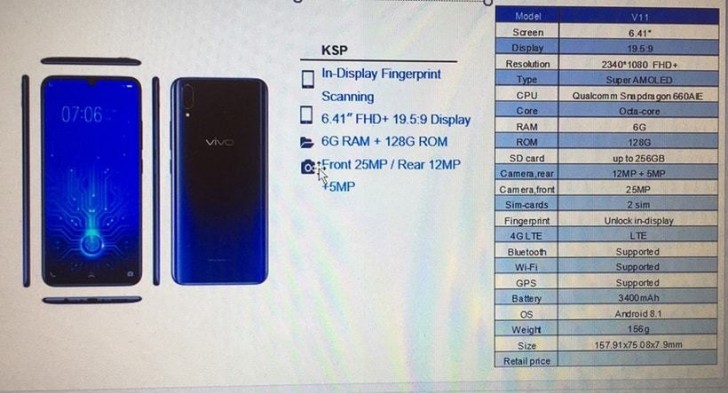
The Vivo V11 will come with a 6.4 inch AMOLED display that will have a Full HD+ resolution of 2340 x 1080 pixels.

Vivo V11

The handset will come with a Qualcomm Snapdragon 660 processor and the device will feature 6GB of RAM and 128GB of included storage. The handset will also come with a microSD card slot which supports up to 256GB cards.

Other specifications on the new Vivo V11 smartphone will include a front facing 25 megapixel camera for Selfies and a dual camera setup on the back. The rear dual cameras include one 12 megapixel camera and one 5 megapixel camera, the handset will come with Android 8.1 Oreo.

https://ift.tt/2PmPCS2

Keepy Smartphone Controlled Keyless Security System For Door And Gates

A new smartphone controlled keyless security system named Keepy has been designed and developed by a team based in Casal di Principe, Italy. Providing an easy and intelligent way to remotely control gates, doors or garages. Watch the demonstration video below to learn more about Keepy which can be controlled using the companion smartphone application available for both Android and iOS platforms.

Keep Smartphone Controlled Keyless Security System

“Anyone who has a garage door remote control is likely to have forgotten their remote at least once, and ended up being locked out of their own house. Then Keepy is the perfect solution for you: Keepy is an intelligent remote control that allows you to control your garage door, or gate, from your smartphone. If your friend calls you, simply activate the gate opener on your smartphone, even if you are enjoying your breakfast, cooking a meal or having an interesting conversation.”


https://www.kickstarter.com/projects/48657744/keepy-smart-keyless-access-for-all/widget/video.html

Features of Keepy include :

– Go completely keyless. You can seamlessly combine Keepy with any smart lock on your home door for a maximum keyless experience for you, your family & friends, service personnel, Airbnb guests and others.
– Open your gate/garage door from anywhere in the world as long as you are connected to the internet. This also means that you don’t have to buy a new remote for each family member.
– Enter in your home without any physical key/remote. Do you or one of your family members always tend to forget the keys/remotes? Now you and your family can enter your home conveniently with your smartphone.
– Grant access for friends & Airbnb guests. Your guests arrive at your place while you’re still on the go? With Keepy and a smart lock at your door you can use the Keepy app to grant them access without having to be there in person.
– Let service providers into your home. Expecting the electrician or your cleaning lady? By granting service providers time-restricted access and logs about their arrival and exit time at your place you don’t have to be at home while they are doing their job.

Keepy is available priced from €59 or roughly £53 for super early bird backers offering a 50 percent saving of the recommended retail price, via the Wisdom Mall campaign page. Worldwide deliveries are expected to take place during December 2018. For more details and all available pledges follow the link below to the official Wisdom Mall campaign page.

https://ift.tt/2nMVuHF

Upmood Emotion Tracking Wearable

If you are interested in learning more about your daily emotions together with insight on your heart rate, stress levels and vitality levels. A new wearable emotion tracker maybe with more investigation aptly named Upmood, launched via Wisdom Mall with the aim of raising just over £25,000. Watch the demonstration video below to learn more about the wearable emotion tracking device which is combined with a smartphone application available for both iOS and Android devices.

Upmood Emotion Tracking Wearable

Upmood

“Upmood’s interface is as easy to use as it is to wear, making tracking your daily emotional health a no-brainer. Choose a strap that fits your mood from our assortment of lightweight, highly-durable polyester straps that come in black and exclusive Upmood colors — sea green and bright yellow.”


https://www.kickstarter.com/projects/1575022394/upmood-track-and-share-your-emotions-with-this-wea/widget/video.html

“Stay connected with your family and friends by sharing your emotions on your Mood Feed. You can also view their emotions, at a glance, and react to their moods. Receive a detailed summary of your emotions each day and track emotional trends over time with your very own Mood Stream. You can even create groups with your friends and family to see their emotions in one place and receive a notification whenever a person makes an update.”

https://ift.tt/2wd8dqL

2018 MacBook Pro models are announced!

Apple eventually updated 2018 MacBook Pro has officially announced the announcement of its models. With more performance and new features, today’s most advanced Mac laptop computers is claimed to be. Here, 2018 MacBook Pro features.

What are 2018 MacBook Pro features?

New Touch Bar and Touch ID featured MacBook Pro models now 8th generation Intel Core processors comes with. 15 inches models 6-core processors , 13 inches in models 4-core processors It offered. Models with new processors offer much more performance comprehensive software and multitasking They offer great advantages to users during

Apple recommends that these MacBook Pro programmers and developers and new MacBook Pro models coding and multiple virtual machines with test environments means that you are designed for speed.

2018 MacBook Pro

Especially at the end of the new MacBook Pro 32 GB RAM many users will be satisfied with the support. With the new generation of processors, this amount of RAM can now be supported. True Tone screen a much better image experience. 500 nit brightness and Wide color fan with P3 base Retina display with support is the best screen ever found on Mac laptop computers. Developed third generation keyboard it is quieter. With the previous generation of butterfly-type keyboards, Apple seems to have received a guarantee after the wake.

2018 MacBook Pro

In some configurations of the 2018 MacBook Pro series Radeon Pro graphics cards It also comes along with. Bigger Force Touch , stereo speakers , Apple design cooling system and Thunderbolt 3 ports among other details.

Another innovation is the first iMac Pro provided with Apple T2 chip. Thanks to the T2 chip, the MacBook Pro now offers improved system security with safe startup and encrypted storage while running, and ”Hey Siri“ Feature comes to Mac for the first time.

New 15-inch MacBook Pro features

– 6 core Intel Core i7 and Core i9 processors up to 2.9 GHz, Turbo Boost up to 4.8 GHz

– DDR4 RAM up to 32 GB

– Radeon Pro graphics with 4 GB video memory in each configuration

– SSD storage up to 4 TB

– True Tone display technology

– Apple T2 chip

– Touch Bar and Touch ID

New 13-inch MacBook Pro features

– 4 core Intel Core i5 and Core i7 processors up to 2.7 GHz, Turbo Boost up to 4.5 GHz and 2 times eDRAM

– Intel Iris Plus Graphics 655 integrated with 128 MB eDRAM

– SSD storage up to 2 TB

– True Tone display technology

– Apple T2 chip

– Touch Bar and Touch ID

2018 MacBook Pro prices

New 13-inch MacBook Pro models Prices starting from 10,999 TL owner. New 15-inch MacBook Pro models are $ 14,999 starting. The 15-inch model with the highest configuration $ 40,799 Let’s also note that the price goes up to such a price. All new models Apple Store in Turkey the sale has started in our country. The product will be available sometime later in the week. Apple Store And Apple Authorized Dealers ‘Will be selling out.

2018 MacBook Pro

https://ift.tt/2OE3Ts1

Apple raised everything! iPhone X flew!

Apple iPhone X , iPhone 8 , iPhone 8 Plus , Macbook Pro, Airpods, Apple Watch and all the products made a huge raise! Currently one of the most expensive devices on the market Apple iPhone X it may have become unapproachable with the last hike he received. iPhone X upgrade with a price tag of 7.500 TL will be sold now. This incredible price is valid for the standard 64 GB model. Apple raises rates it seems like a lot to talk about in the technology world.

iPhone X got a raise! It was 7.500 TL!

I Phone X normally From the price band of 5.200 TL He was waiting for his receivers. Even though it is seen as quite expensive by many people, the price of the device 2 thousand TL He took a raise on. This was an incredible price increase. Apple’s hike was expected to be long, but it was not predicted that the price would be so high.

256 GB Model is almost 9 thousand TL ‘ officially frightens the price. The price of this model was determined as TL 8.599.

Ekran-Resmi-2018-07-12-16.39.09

Apple raised a raise on top!

Moreover, the only affected product was not iPhone X. Other products that have increased prices in an amazing manner are as follows:

The starting price of the iPhone 8 is the old price of the iPhone X! The 64 GB standard version of the device is now 5.199 TL.

iPhone 8 Plus $ 5.899 It was.

While the new Macbook models are hurting their prices, the standard and cheapest Macbook Pro (13) is now $ 6.200 not, $ 7.699 Will begin.

The new 15-inch Macbook Pros, however, 40 thousand TL They have a feather like.

Apple Watch $ 1.999 It was.

https://ift.tt/2OEMGPs

Introducing Blackmagic eGPU that excites the MacBook Pro!

2018 Macbook Pro Apple brands MacBook users who are announcing their models and making a serious raise on all their products, especially iPhone models more powerful graphics card went to cooperate with Blackmagic to be able to answer the request.

Apple at WWDC 2017 external GPU support , officially announced (for years, e-GPU is being used with special software). MacOS released in March High Sierra 10.13.4 Macbook models have gained this support and it has become possible to connect an external graphics card via Thunderbolt.

In the meantime, Razer and similar companies are offering new e-GPU boxes for sale, as of today Blackmagic eGPU called the sale of the product.

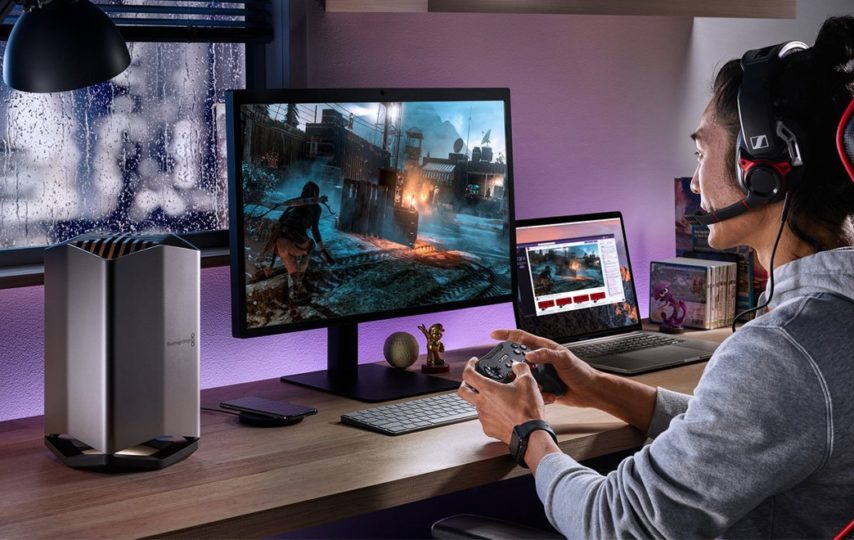
Blackmagic eGPU is introduced!

Before moving on to the details of the product for the Macbook Pro, it is worth noting that e-GPU boxes for those who do not have it, Thunderbolt port products that are connected to the laptop computers.

The Blackmagic eGPU, priced at $ 699, has 8 GB of GDDR5 memory Radeon Pro 580 graphics card to give MacBook Pro top-of-the-line graphics performance. With this product, the graphics performance of the 15-inch MacBook Pro is 2.8 times higher, and the 13-inch model is 8 times better.

Blackmagic eGPU is introduced!

As we have already mentioned, on the device connected to the Macbook Pro via Thunderbolt 3, two Thunderbolt 3 the connection point is located. And also four USB 3.0 and one HDMI 2.0 among other connection points on the device.

Apple says the e-GPU box has a very quiet cooling system. However, you are not allowed to change the display card inside the box.

https://ift.tt/2BefPit

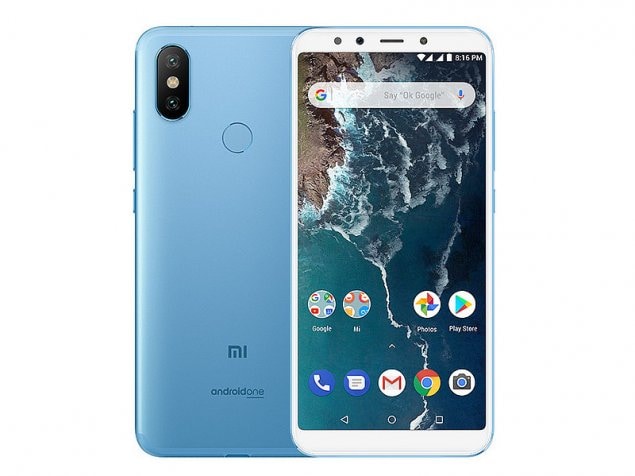
Xiaomi Mi A2

Xiaomi has launched the Mi A2 as its second Android One phone. Google originally started the Android One programme to deliver the stock Android experience on entry-level handsets in developing markets. However, there were no new products after the initial launches from Karbonn, Micromax and Spice. Google later revived Android One in 2017 to offer users smartphones running stock Android without any manufacturer customisations. The first of these was the Xiaomi Mi A1 which launched last year.

More manufacturers have enrolled into the program since then, but very few devices have made it. Nokia, an HMD Global brand, was the first to announce that its entire Android lineup would adopt Android One and all the smartphones that it announced at MWC 2018 have now launched. The new Mi A2 promises better hardware while still running bone-stock Android. So should the Xiaomi Mi A2 be the first choice for an Android purist on a budget? We put it to the test.

Xiaomi Mi A2 design

The Mi A2 is a well-designed smartphone. It has a metal unibody that gives it a premium feel in the hand. The first change you will notice compared to the Mi A1 is that it has a big 5.99-inch display with an 18:9 aspect ratio, which makes the phone tall and narrow. The sides are curved which makes it comfortable in the hand. Our Black review unit had a matte finish which resisted fingerprints to some extent. This phone is quite slippery and we would recommend that you put the case supplied in the box to use.

The power and volume buttons are on the right and offer good feedback when pressed. We found that the power button is well placed, but the volume buttons are a little too high for our liking. Xiaomi has positioned the selfie camera, earpiece, selfie light and a notification light above the display while the space below it is blank. For those curious, this smartphone has a single-colour notification LED.

The USB Type-C port at the bottom has speaker grilles on either side but only the right one houses a loudspeaker. An IR emitter that can be used to control IR-based appliance is at the top along with the secondary microphone. There is no 3.5mm headphone jack so you get a USB Type-C dongle in the box. Xiaomi claims that it has used a high-quality amplifier to improve audio output from the speaker and headphones.

Xiaomi has opted for a dual camera setup at the back, which is now positioned vertically compared to the horizontal setup on the Mi A1. There’s a 12-megapixel primary camera, a 20-megapixel secondary sensor, and an LED flash. This camera module protrudes quite a bit causing the Mi A2 to rock when placed on a flat surface. The fingerprint scanner is next to the camera module, at the natural resting position of either index finger. Xiaomi has opted for a 3000mAh battery to power the Mi A2.

Xiaomi Mi A2 specifications, software, and features

The Chinese smartphone maker has chosen the Qualcomm Snapdragon 660 processor to power the Mi A2. It has eight Kryo 260 CPU cores and an Adreno 512 GPU. The A2 has 4GB of RAM and 64GB of internal storage. Sadly storage isn’t expandable unlike the Mi A1, and you will need to make do with the storage you get. This is a dual-SIM smartphone and has two Nano-SIM slots. There is support for 4G and VoLTE on both SIMs.

The 5.99-inch display sports a full-HD+ resolution, has a pixel density of 403ppi, and uses Corning Gorilla Glass 5 for protection. Viewing angles are decent but the display does not get very bright. You don’t get the option to tweak the output. The Ambient Display feature wakes the phone when you get a notification.

At 3000mAh, the battery capacity is lower than what most other smartphones in this segment offer. The Xiaomi Redmi Note 5 for example packs in a bigger 4000mAh battery. The Mi A2 supports Qualcomm’s Quick Charge 4+ but you only get a standard 10W charger in the box. Connectivity options on the Mi A2 include Bluetooth 5.0, dual-band Wi-Fi 802.11ac, GPS, A-GPS, GLONASS, and Beidou.

Xiaomi has focused on the cameras of the Mi A2. The 12-megapixel primary rear camera has 1.25-micron pixels and an f/1.75 aperture. The secondary 20-megapixel camera uses 4-in-1 pixel binning with bigger 2-micron pixels and an f/1.75 aperture. Unlike the Mi A1 which had zoom lens for 2X optical zoom with the secondary camera, the one on the Mi A2 should help in low light instead.

The Xiaomi Mi A2 runs stock Android 8.1 Oreo, and Xiaomi has added its Feedback, File Manager, and Mi Drop apps on top. While the Feedback app cannot be disabled or uninstalled, you can go ahead and uninstall the other two. The camera app has also been customised by Xiaomi and is different from the default Android app – more on that in a bit. Of course, this phone also has gets Google apps preinstalled. When we started reviewing the phone it was running the June security patch but we got a software update during the course of the review bringing us up to date with the August security patch.

If you are an Android purist, you will like the software experience on the Mi A2. It has an app drawer, and you need to swipe up to see all your installed apps. You also get Google Feed by swiping right from the homescreen and summon the Google Assistant by long-pressing the home button. We found that the phone lacks an app to let you use the IR emitter, which means that you cannot start controlling appliances right out of the box. You can download the Mi Remote app from the Play Store, but Xiaomi told Gadgets 360 that it will be rolling out an update after which the app will be preinstalled. The only gesture the Mi A2 supports is that double-clicking the power button will immediately launch the camera app.

Xiaomi Mi A2 performance and battery life

We have used the Nokia 7 Plus, which has the same processor as the Xiaomi Mi A2, and was also running stock Android. The Xiaomi Mi A2 offers similar performance and we found no lag or stutter when flipping through the phone’s UI and multitasking. With 4GB of RAM, you should be able to multitask easily without the phone automatically killing apps in the background. The fingerprint scanner is quite fast and was quick to unlock the phone.

The Xiaomi Mi A2 scored 1,33,467 in AnTuTu, and 1,645 and 4,840 in Geekbench 4’s single-core and multi-core tests respectively. These scores are slightly lower on average than those of the Nokia 7 Plus, which managed 1,37,573, 1,590 and 5,780 respectively. The Mi A2 also got 24,850 in 3DMark Slingshot Unlimited and 14fps in GFXBench Manhattan 3.1.

We played games such as PUBG, Clash Royale, and Asphalt 9. PUBG ran at medium settings by default and we did not have any issues with performance. We played the game for 25 minutes, surviving an entire round, and found that the phone did get warm to the touch without getting uncomfortably hot. Asphalt 9 ran at the default settings without any hiccups either.

In our HD video loop test, the smartphone ran for 8 hours and 13 minutes, which is below average. We have seen the Xiaomi Redmi Note 5 Pro and the Redmi Note 5 last for close to 16 hours thanks to their bigger batteries. With our usage comprising of active WhatsApp and Gmail accounts, an hour worth of games, some time with Instagram, and making a few calls, the battery saver mode kicked in after 7 and 30 minutes. If your usage is similar, you will need to keep the charger handy. The supplied charger takes close to 2 hours to charge the Mi A2 completely but so should invest in a Qualcomm Quick Charge certified charger to speed that up.

Xiaomi Mi A2 cameras

Xiaomi has worked on its camera app and it is different from the stock Android camera. You get Short Video, Portrait, Square, Panorama, and a Manual mode, apart from the usual Photo and Video modes. The Manual mode lets you set white balance, focus, shutter speed and ISO, and also lets you choose between the ‘regular’ and ‘low light’ lenses. Xiaomi claims that it has tweaked the Portrait mode such that it uses the 12-megapixel camera in favourable light conditions but switches to the 20-megapixel camera in low light, but we found that this did not actually happen. While one lens is in use, the other acts as a depth sensor.

The Mi A2 is fairly quick to meter light and lock focus. Photos taken with the Mi A2 outdoors have a good amount of detail and colours are quite accurate. Zoom into an image and you can still see details without much loss. We noticed that the camera app also switched HDR on automatically when the scene required it, bringing out more details from the shadows and delivering slightly sharper results. Autofocusing is quick when taking macros and we found that the Mi A2 could focus on relatively small objects. Macros were sharp and the phone managed good separation between the subject and the background.

In low light, the Mi A2 bumps the ISO up and lowers the shutter speed to help the primary camera capture more light, instead of switching to the secondary one. Xiaomi should have taken advantage of the better sensor for low-light shots by switching automatically, but you can do this yourself in Manual mode. These photos also have decent amounts of detail but we noticed aggressive noise reduction being applied in darker areas, leading to a watercolour effect when zooming in.

Selfies are detailed and we got sharp results when shooting indoors. The selfie fill light comes in handy when shooting in low-lit conditions. HDR is available for the selfie camera and kicks in automatically when required. You can also select the level of beautification you need, and an Advanced mode which lets you tweak different beautification parameters.

Video recording on the Xiaomi Mi A2 maxes out at 4K for the primary camera and 1080p for the selfie camera. You also get the option to shoot in 1080p at 60fps rather than 30fps with the rear camera, but we found that it had difficulty locking focus at the higher frame rate. Video stabilisation is available for the rear camera, and helps you capture steady footage.


Verdict
The Xiaomi Mi A1 was an obvious choice for anyone looking for stock Android on a budget. Things however have changed, with HMD Global bringing in Nokia handsets that run pure stock Android as well. Xiaomi will have to compete on pricing, and that’s exactly what it has done with this launch.

The Xiaomi Mi A2 gets the cameras right and is amongst the best camera phones at this price point. Also, the powerful Snapdragon 660 processor has so far been restricted to more expensive phones, making this phone a tempting option for someone looking for a performer on a budget.

Xiaomi which is quite aggressive for the hardware it offers. However, there are a few chinks in the Mi A2’s armour. Its battery capacity is below average, resulting in relatively poor battery life. Xiaomi has also ditched the 3.5mm headphone jack and there’s no microSD card slot, which are both things that buyers look for. If you can’t do without stock Android and want good cameras without paying too much, then the Mi A2 should check all your boxes. If you’re okay with MIUI, the Xiaomi Redmi Note 5 Pro is still a good alternative at a slightly lower price.

https://ift.tt/2KMHhDE

Motorola Moto Z3 Play

Moto Mods live on. The Moto Z3 Play continues Motorola’s three-year run of modular add-ons, providing a new phone to go with your extra battery, speaker, or Polaroid printer Mods. But at $499.99 (or $449.99 on Amazon), the Z3 Play is priced on the high end of the midrange spectrum, putting it in competition with more powerful phones like the OnePlus 6. It’s a solid choice if you already own or want to get started with Moto Mods, but it doesn’t really offer anything new or compelling on its own.

Design, Display, and Features

The Z3 Play has all the sleek looks and premium qualities of a flagship phone. It’s quite attractive, with a shimmering deep indigo glass back, and super-thin at 0.27 inches. However, despite an 18:9 aspect ratio, it’s limited in form factor by Motorola’s commitment to sticking to the same overall body shape as previous generations of the Z series in order to retain compatibility with the various Mods.

a

That means dimensions haven’t changed much from previous models. The Z3 Play measures 6.2 by 3.0 inches (HW) and weighs in at 5.5 ounces. That’s identical to the Z2 Play, and similar to the OnePlus 6 (6.1 by 3.0 by 0.3 inches, 6.2 ounces). The relative thinness of the Z3 Play is a big plus, because with exception to the Style Shells, every Moto Mod you use adds considerably to its thickness.

There are some minor design tweaks from previous models to accommodate the 18:9 aspect ratio. Because of the minimized top and bottom bezel, the fingerprint sensor has been moved to the right side, under the clicky volume buttons. The left side of the phone has a ridged power button, while the bottom has a USB-C charging port. The top has a SIM/microSD card slot that worked fine with a 256GB card, though it’s certified to take cards up to 2TB.

There’s no 3.5mm headphone jack, but the phone does ship with a USB-C dongle for wired audio. The shimmery glass back has a protruding dual-sensor camera setup (up from the single sensor before) and the magnetic connector pins on the bottom enable Moto Mods functionality. The phone is splash resistant, but not waterproof.

The front is an 18:9, 6-inch, 2,160-by-1,080 AMOLED screen with very rich colors and dense, inky blacks. It’s easy on the eyes with a crisp 402 pixels per inch. That’s no match for the Quad HD Samsung Galaxy S9 (570ppi), but it’s on par with the OnePlus 6 (402ppi). Viewing angles are excellent, and the screen gets very bright, allowing it to remain visible under direct sunlight. In Display Settings, you’re able to tweak screen color temperature and control saturation to suit your preferences.

a

As always through the preinstalled Motorola app, you can enable you can enable Moto Actions that include gestures like twisting the phone to launch the camera app, chopping it twice to trigger the flashlight, and swiping down to shrink the screen for one-handed use. The screen can also be enabled to display notifications the moment you pick it up, along with the time, date, battery percentage, and media controls.

Moto Voice is still around (and perpetually in beta), letting you control the phone through “show me” voice commands. Ultimately, it doesn’t provide much extra functionality beyond what Google Assistant already offers, and we prefer using the latter for its deeper Google integration and AI-assisted capabilities. If you buy the Amazon Prime exclusive version, you get Amazon Alexa preloaded, though that doesn’t hinder you from using Google Assistant.

One Button Navigation is gone, but at the bottom of the screen, you can still switch between Android virtual buttons or a new, Android P/iOS-like horizontal bar, which you can tap or swipe to navigate. It’s a smooth and relatively seamless way to interact with the phone once you get the hang of it.

Network Performance and Connectivity

Bottom

The Z3 Play is available unlocked through Motorola or Amazon. Regardless of where you get it from, it supports both CDMA and GSM carriers, with LTE bands 1/2/3/4/5/7/8/12/13/14/17/20/25/26/28/29/30/38/40/41/66. The only band missing here is LAA, which increases downlink and improves coverage through carrier aggregation. Still, you can use the Z3 on all major US carriers with a good degree of connectivity. We tested it on T-Mobile in heavily congested midtown Manhattan and saw fairly average speeds.

Call quality is solid. Transmissions can sound grainy and somewhat robotic, but overall clarity is fine. Noise cancellation is great at blotting out the vast majority of background noise. Because the earpiece doubles as the primary speaker, it makes for good speakerphone calls, but average music playback.

There are plenty of ways to connect outside of the cellular modem, including dual-band Wi-Fi, NFC, and Bluetooth 5.0 for wireless listening on more than one audio device at a time.

Mods Are Here to Stay…For Now

Mostly, the Z3 Play feels like a somewhat affordable platform for Moto Mods: It’s a phone you can add a battery to, or one of several big speakers, or a projector, or a printer. It works just as well as it always has. You’re able to seamlessly snap the magnetic back onto the phone, the Moto Mods platform recognizes it, and you’re good to go. Some Mods like the Moto Gamepad can be charged separately via USB-C, others like the Power Pack can charge through the phone itself.

a

We’ve brought Moto Mods to trade shows, because slapping a battery Mod onto a phone is easier than using a battery case or a cabled battery, and adding the JBL speaker Mod with its kickstand makes the phone a great bedside radio. The major problem is that Motorola just doesn’t sell enough Mod-compatible phones to create its own third-party accessory ecosystem. No company but Apple seems to sell enough phones to do that.

While there are currently more than a dozen Moto Mods, the high-profile, third-party add-ons we saw at CES over six months ago haven’t hit the market yet. The Livermorium Slider Keyboard Moto Mod, which was supposed to come out months ago, is still being tweaked. The Lenovo Vital Moto Mod for healthcare uses was supposed to be out in April, but it “doesn’t have a sales channel,” according to Motorola.

For most consumers, the only Moto Mods of interest are likely to be the various Style Shells and Power Packs.

a

Processor and Battery

The major corner cut here is on the processor and memory. A Qualcomm Snapdragon 636 with 4GB of RAM is fine, and Motorola says it’s 30 percent faster than the Z2 Play, but it can’t come anywhere near the OnePlus 6’s performance. For instance, the Z3 Play scored 5,786 on PCMark’s work performance test, which measures a variety of tasks like web browsing and video and photo editing, compared with the OnePlus 6’S 8,484.

The 4GB of RAM is sufficient for multitasking, and Motorola’s minimalistic UI layer doesn’t cause any slowdowns. Graphics performance is mediocre, however, with the Z3 Play scoring just 6.0fps on the Car Chase on-screen test. When it comes to playing demanding games like PlayerUnknown’s Battlegrounds, the Z3 Play can only manage medium graphics settings; gameplay is choppy, but doable.

Battery life is solid. The phone clocked 5 hours, 44 minutes when streaming video over LTE at maximum brightness. That’s on par with the OnePlus 6 (5 hours, 49 minutes), though both fall short of top-tier phones like the Samsung Galaxy S9 (which lasted over 10 hours in the same test). Fortunately, if you want more power, you always have the option of using one of the various Power Pack Mods. The included 15W Turbo Power adapter supports fast charging. Wireless charging isn’t built in, but it’s available with a Moto Style Shell Wireless Charging Mod.

a

Camera

The rear cameras (one 12MP, one 5MP for depth effects) pop out on a pronounced disc with sharp edges. That bump is there so the cameras aren’t recessed too far when you put on a magnetic back cover or a Moto Mod. Outdoors and in good lighting, the Play takes crisp pictures with minimal noise. Color reproduction is accurate, though greens and reds can look a little dull if you’re used to the brighter, more saturated colors of a Samsung device. Low-light shots are on the average side, with the Z3 Play managing well enough when it comes to focus and lighting, but suffering from some noise and loss in clarity. It’s about on par with the Moto G6 in low-light performance, but not up to snuff with the OnePlus 6. Manual controls that let you tamp up settings like ISO.

The Z3 Play does bokeh both on the front and back cameras. On the rear camera, it can do selective black-and-white or partially moving cinemagrapheffects, which are cool.

The 8MP front-facing camera sensor is good and generally quite clear, though it can be a little on the soft side in direct sunlight. For video, the phone offers fairly stable 4K recording at 30fps.

a

Software

The phone runs Android 8.1 Oreo. Motorola says that it will get upgraded, but hasn’t offered a specific timeline. In terms of software, the phone runs a fairly stock version of Android with Motorola’s aforementioned add-ons. The unlocked model doesn’t have much in preloaded content aside from the Motorola app and the Alexa app if you buy it from Amazon.

a

Out of 64GB of total storage on our unlocked reviewed unit, we had 47.10GB available for use. That’s ample space for adding more apps and games, and you always have the option of using external memory.

Conclusions

The Moto Z3 Play has plenty going for it, including solid overall performance, a capable camera, and support for Motorola’s useful modular backs. Unfortunately, it runs into the same problem as the One Plus 6—the US just doesn’t have a market for $500 phones that don’t have a monthly payment plan. And if you do have $500 to spend and want an unlocked phone, the OnePlus 6 is a better option in almost every regard, with much more powerful hardware and a sharper camera. That said, given that the newly announced Moto Z3 is exclusive to Verizon, the Z3 Play is the only modern way for everyone else to get access to the Moto Mods ecosystem, which could up its appeal considerably if you’re sold on the concept.

https://ift.tt/2vBpomv

A home robot that folds and sorts clothes

Finally, a smartwatch that can make Fitbit proud

For the past couple of years, Fitbit has flirted with making a smartwatch to compete with the Apple Watch, Pebble, and Samsung. But, until recently, the company had always stopped short of calling one of its products a smartwatch.

Technically, the Versa isn’t Fitbit’s first smartwatch. That crown belongs to the Ionic, the first device to launch with Fitbit OS.

Enter the $199 Versa: A smartwatch that looks unlike anything the company has done before. It’s not too big, checks all the boxes of a fitness tracker, and includes some new smartwatch tricks from Fitbit.

A FITBIT THAT LOOKS LIKE A WATCH

fitbit-versa-1.jpg

The Versa isn’t Fitbit’s first watch-like device, but it is the first one that looks like a watch. Previous products like the Surge, Blaze, or even the Ionic looked more like an activity tracker than a watch. Boxy designs do not lend themselves to a svelte looking watch.

With the Versa, the company focused on creating a watch that was more appealing to the overall market, instead of fitness enthusiasts first.

The end results is a watch that reminds me a lot of the Pebble Time 2 (Fitbit acquired Pebble in late 2016), with rounded edges and corners. According to Fitbit, however, the Versa’s design was something that came before the Pebble acquisition and the similarities are merely coincidental.

The watch itself has a display that measures 1.34 inches. Fitbit’s promotional images make it look bigger than it actually is. With the goal of making a watch that appeals to male and female users, the Versa’s size is slightly smaller than the 42mm Apple Watch.

I would prefer a Versa that’s a bit bigger than its current size, but the smaller display and footprint isn’t a deal breaker by any means.

The Versa has a total of three physical buttons: A single button on the left side, and two on the right side. The buttons are used to navigate the watch’s interface or act as shortcuts to apps and settings when long-pressed.

The color touchscreen is responsive when using gestures to scroll through notifications or rearrange installed apps.

On the bottom of the watch is the charging port that works in tandem with the included cradle to charge the Versa in roughly two hours. Also on the underside is the necessary sensor for heart rate tracking.

In the review package, Fitbit included the Versa, which comes with a standard watch band, a leather band, and a metal links band. Switching bands is a breeze, thanks to the quick-release mechanism. After using all three bands over the past couple of weeks, I found the classic and leather bands the most appealing. The metal link band is comfortable, but the clasp is a chore to open and close.

While I didn’t receive any compliments about the Versa on my wrist, I don’t have any issues wearing the Versa to workout or to an event where fancy attire is required.

KILLER APP — AND THEN SOME

Fitbit’s approach to everything it does has always revolved around helping its users become healthier. Whether it’s by counting steps and tracking sleep or building a community of fellow users to cheer you on and compete against.

With the Versa, Fitbit is using the millions of steps, nights of sleep, and countless other metrics it has collected over the years and putting it to use. A new Today view shows your current activity stats such as steps or resting heart rate and offers advice on what you can do to increase activity or sleep better.

The Versa sticks to Fitbit’s staple tracking of steps, distance, calories burned, sleep, heart rate, floors climbed, active minutes, and stationary time. Hourly activity — an opt-in feature — cheers you on to reach 250 steps each hour.

Even though there’s a long list of apps available for the Versa, in use it’s clear the company’s main focus is health. And, for some, that is the most important app.

For others, however, the smartwatch features are what makes the Versa attractive. Currently, Android and iOS devices are supported, and for the most part, offer feature parity on both platforms. Notifications display on the Versa, and call alerts give the option to send an incoming call to voicemail or answer it on a connected phone.

The Android or iOS Fitbit app is used to control syncing, log activity, fine-tune the alerts you receive on your wrist, and it’s also how you access the app and clock face stores.

Neither store is overflowing with options, but that’s not necessarily a bad thing. Developers are still trying to figure out the best use for a small screen, and having a store overrun with apps that don’t offer any real value is frustrating for the user.

It’s not that Fitbit needs a long list of high-quality apps to excel as a smartwatch maker, but the overall look of third-party apps feels somewhat generic.

fitbit-versa-3.jpg

Not all Fitbit OS apps are a waste. A Starbucks app displays your Starbucks card number and barcode for easy payment, for example. The New York Times also has an app that is designed to quickly catch you up on the day’s news.

Navigating Fitbit OS is primarily done with gestures. From the clock face, a swipe up reveals the today view, a swipe to the left displays installed apps, and a swipe down lists notifications.

Long-pressing the left button acts as a shortcut to music controls for music that’s stored on the watch itself, or controlling music on your phone, along with quick settings to disable notifications and the display.

Currently, Versa supports Pandora and Deezer music streaming services, as well as syncing your own music library from a computer to the watch’s onboard storage, capable of storing roughly 300 songs. Versa works with any Bluetooth headphones or earbuds for listening to music without a phone nearby. Spotify support is something the company is looking into but doesn’t have anything to announce quite yet.

Fitbit claims four or more days of battery life on the Versa. After initial setup and tinkering with the watch, my first charge netted a respectable — but disappointing — 2.5 days of use. Subsequent charges have pushed over six days of use, so don’t get discouraged if you aren’t quite hitting the four-day estimate right away.

SPECIAL EDITION

There are technically two different models of Versa, at least here in the US. There’s the standard Versa, and then there’s a Special Edition model. Outside of a different color and extra watch band, the biggest difference between the two is Fitbit Pay support.

At $229, the special edition model includes an NFC chip to support mobile payments through Fitbit Pay. In talking with Fitbit about the decision to release two models, the decision really boiled down to lack of adoption of mobile payments in the US. Both consumers and retailers have been slow to adopt mobile payments.

SMARTWATCH OR BUST?

Maybe.

The narrative surrounding Fitbit’s fitness trackers has transitioned from users not really needing or wanting a smartwatch, to embracing the fact that the future of the wearable industry is the smartwatch.

Fitbit OS, the operating system running on the Ionic and now Versa, was born out of the company’s acquisition of Pebble, a pioneer of the smartwatch. Fitbit now has dedicated app and clock face stores.

The company has reiterated its commitment to continue developing fitness trackers alongside smartwatches, but the about-face in attitude toward what a wearable is and should do surely will influence Fitbit’s product roadmap.

THERE’S ROOM FOR VERSA

fitbit-versa-2.jpg

Of course, there’s still a lot of work for Fitbit to do to compete with the Apple Watch. But Fitbit feels it has positioned itself for success, leveraging its health ambitions and a $199 price point that’s appealing to most consumers.

In May, the company plans to release an update that adds female health tracking to the Fitbit app and Versa, along with the ability for Android users to reply to messages directly from the watch.

Continuous updates are part of the puzzle to creating a compelling smartwatch, and Fitbit is well aware.

The Apple Watch is still the best smartwatch for those who want a watch that works seamlessly with the iPhone — and that will be true as long as Apple limits what developers can and can’t do with its platform.

As for the Versa, well, it’s nice to finally have a reliable and affordable alternative that works across multiple platforms. I have zero hesitation in recommending the Versa. Welcome to the smartwatch race, Fitbit. It’s about time. The Versa is available for preorder right now and will begin shipping in one to two weeks, according to Fitbit’s website.

PREVIOUS AND RELATED COVERAGE

Fitbit Ionic review: Tops the Apple Watch with fitness focus, long battery life, detailed sleep tracking

The Fitbit Ionic brings integrated GPS, onboard storage for music playback, smart notifications, wearable payment support, and an application platform in a very attractive and comfortable form factor with a battery life of up to four days.

Apple Watch Series 3 review: Always connected, just without the guilt

Apple’s newest smartwatch is smarter in that it’s always connected, but is it worth the cost?

https://ift.tt/2vCbpwN

Samsung’s new phone shows how hardware innovation has slowed

Samsung’s new smartphone illustrates the limits of innovation at a time when hardware advances have slowed.

The new phone, the Galaxy Note 9, will be faster and will last longer without a recharge. But while earth-shattering new features are in short supply, it will carry an earth-shattering price tag: $1,000.

The minor improvements reflect a smartphone industry that has largely pushed the limits on hardware. Major changes tend to come every few years rather than annually, and this isn’t the year for anything revolutionary in the Note.

The new phone will get some automatic photo editing and a stylus that can serve as a remote control. But the highlights will be a bigger battery, a faster processor and improved cellular speeds.

“You don’t see massive breakthroughs anymore from a hardware perspective,” said Carolina Milanesi, an analyst with Creative Strategies. “Everything is a little bit better, but nothing’s revolutionary.”

A 21 percent boost in battery capacity from last year’s Note 8 should translate to more than a day of normal use without a recharge. Samsung has been conservative on battery improvements ever since its Note 7 phone in 2016 developed a tendency to burst into flame, prompting an expensive recall and delivering a hit to the company’s reputation.

Since then, Samsung has subjected its phones to multiple inspections, including X-rays and stress tests at extreme temperatures. The company is also sending phones to outside labs, including UL, for independent safety tests.

“We’re three generations removed now,” Samsung’s director of U.S. product marketing, Suzanne De Silva, said of the company’s renewed confidence in the battery. “This is the right innovation at the right time.”

Although Samsung’s Note phones are large, niche products intended for power users, they offer a preview of what’s to come in the mass-market Galaxy S line. A dual-lens camera, with better zooming, came to the Note 8 months before the S9 Plus got it, for instance. The Note also got curved edges before that became standard on Samsung’s flagship phones.

The new phones will come out Aug. 24. Borrowing from the iPhone’s playbook, the Note 9 will have the same U.S. price regardless of carrier. The starting price of $1,000 is an increase from the Note 8, but on par with Apple’s top-of-the-line iPhone X. The Note 9 will get double the storage, at 128 gigabytes, compared with typical high-end phones, including the iPhone X. Samsung will also sell a 512-gigabyte version for power users for $1,250.

Even though the improvements from last year aren’t huge, Technalysis Research analyst Bob O’Donnell said they will come across as major for those who haven’t upgraded for a few years.

Thursday’s announcement in New York comes about a month before Apple is expected to unveil new iPhones. There’s been speculation — unconfirmed by Apple — that all new iPhones will ditch the home button and fingerprint sensor and rely entirely on facial-recognition technology found in the iPhone X. The Note 9 will still have a fingerprint sensor on the back of the phone. In a jab at Apple, Samsung executives also frequently emphasize that their phones have standard headphone jacks, which newer iPhones no longer do.

The camera in the Note 9 will use artificial intelligence to detect what’s in a scene — whether that’s food, flowers or a sunset — to automatically tweak images to make them pop. It’s much like applying filters with an app, except that the phone will do this itself, much the way Google’s Pixel phones already do.

As with the Pixel, the Note won’t be saving a version without the tweaks. Purists can turn the feature off to get images that reflect what the eye sees — an option unavailable with Pixel.

The camera will also offer a warning if someone blinked in a shot, or if the image is blurry.

The Note’s stylus will now have Bluetooth, allowing people to control phones and apps from up to 30 feet away. This will let people control music or snap selfies just by clicking the stylus.

Samsung also said the popular shooter game “Fortnite” is coming to Android and will be exclusive to Samsung phones until Sunday.

Samsung also previewed a new voice-assisted speaker, the Galaxy Home, using its homegrown digital assistant, Bixby. It promises quality sound, in a potential challenge to Apple’s Siri-based HomePod speaker. Samsung said more details would come later this year. Samsung’s current speaker, the Invoke, uses Microsoft’s Cortana assistant.

Samsung also announced a new smartwatch and a partnership with Spotify intended to make it easier to switch music playback between phones, TVs and the company’s new speaker.

https://ift.tt/2vxPnuK

Japanese students use VR to recreate Hiroshima bombing

It’s a sunny summer morning in the city of Hiroshima, Japan. Cicadas chirp in the trees. A lone plane flies high overhead. Then a flash of light, followed by a loud blast. Buildings are flattened and smoke rises from crackling fires under a darkened sky.

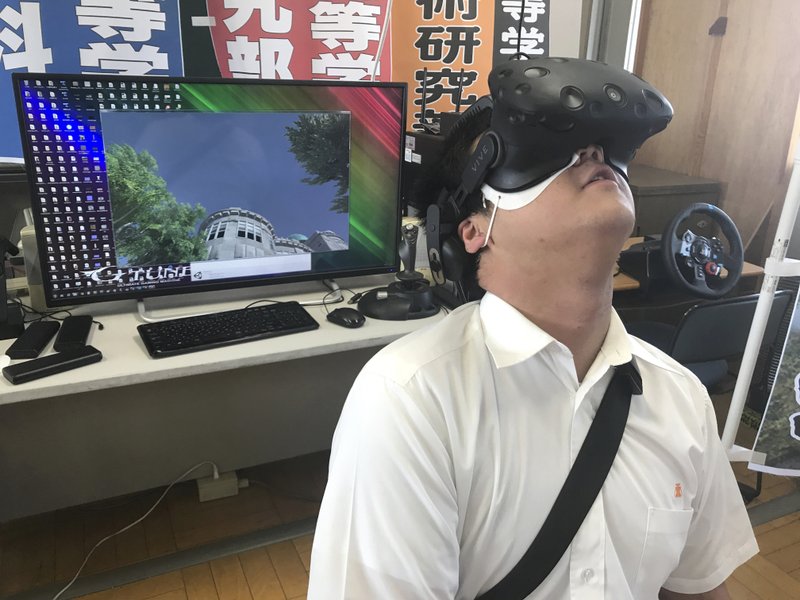
Over two years, a group of Japanese high school students has been painstakingly producing a five-minute virtual reality experience that recreates the sights and sounds of Hiroshima before, during and after the U.S. dropped an atomic bomb on the city 73 years ago Monday.

By transporting users back in time to the moment when a city was turned into a wasteland, the students and their teacher hope to ensure that something similar never happens again.

The Aug. 6, 1945, bombing of Hiroshima killed 140,000 people. Three days later, a second U.S. atomic bomb killed 70,000 people in Nagasaki. Japan surrendered six days after that, ending World War II.

“Even without language, once you see the images, you understand,” said Mei Okada, one of the students working on the project at a technical high school in Fukuyama, a city about 100 kilometers (60 miles) east of Hiroshima. “That is definitely one of the merits of this VR experience.”

Wearing virtual reality headsets, users can take a walk along the Motoyasu River prior to the blast and see the businesses and buildings that once stood. They can enter the post office and the Shima Hospital courtyard, where the skeletal remains of a building now known as the Atomic Bomb Dome stand on the river’s banks, a testament to what happened.

The students, who belong to the computation skill research club at Fukuyama Technical High School, were born more than half a century after the bombing. Yuhi Nakagawa, 18, said he initially didn’t have much interest in what happened when the bombs were dropped; if anything, it was a topic he had avoided.

“When I was creating the buildings before the atomic bomb fell and after, I saw many photos of buildings that were gone. I really felt how scary atomic bombs can be,” he said. “So while creating this scenery, I felt it was really important to share this with others.”

To recreate Hiroshima, the students studied old photographs and postcards and interviewed survivors of the bombing to hear their experiences and get their feedback on the VR footage. They used computer graphics software to add further details such as lighting and the natural wear and tear on building surfaces.

“Those who knew the city very well tell us it’s done very well. They say it’s very nostalgic,” said Katsushi Hasegawa, a computer teacher who supervises the club. “Sometimes they start to reminisce about their memories from that time, and it really makes me glad that we created this.”

The students are working through summer vacation in a classroom without air conditioning, as temperatures reach 35 degrees Celsius (95 degrees Fahrenheit). With the survivors aging, Hasegawa said, it’s a race against time.

https://ift.tt/2B28Ysx